mcg to mL Calculator
Enter a concentration, desired dose and syringe size to calculate the volume to draw in mL, U-100 units, mcg and mg.
Result
—
Result
— mL
- U-100 syringe units
- —
- Dose in mcg
- —
- Dose in mg
- —
U-100 only. Confirm your concentration, dose and syringe markings before use.
iPhone & iPad · Free
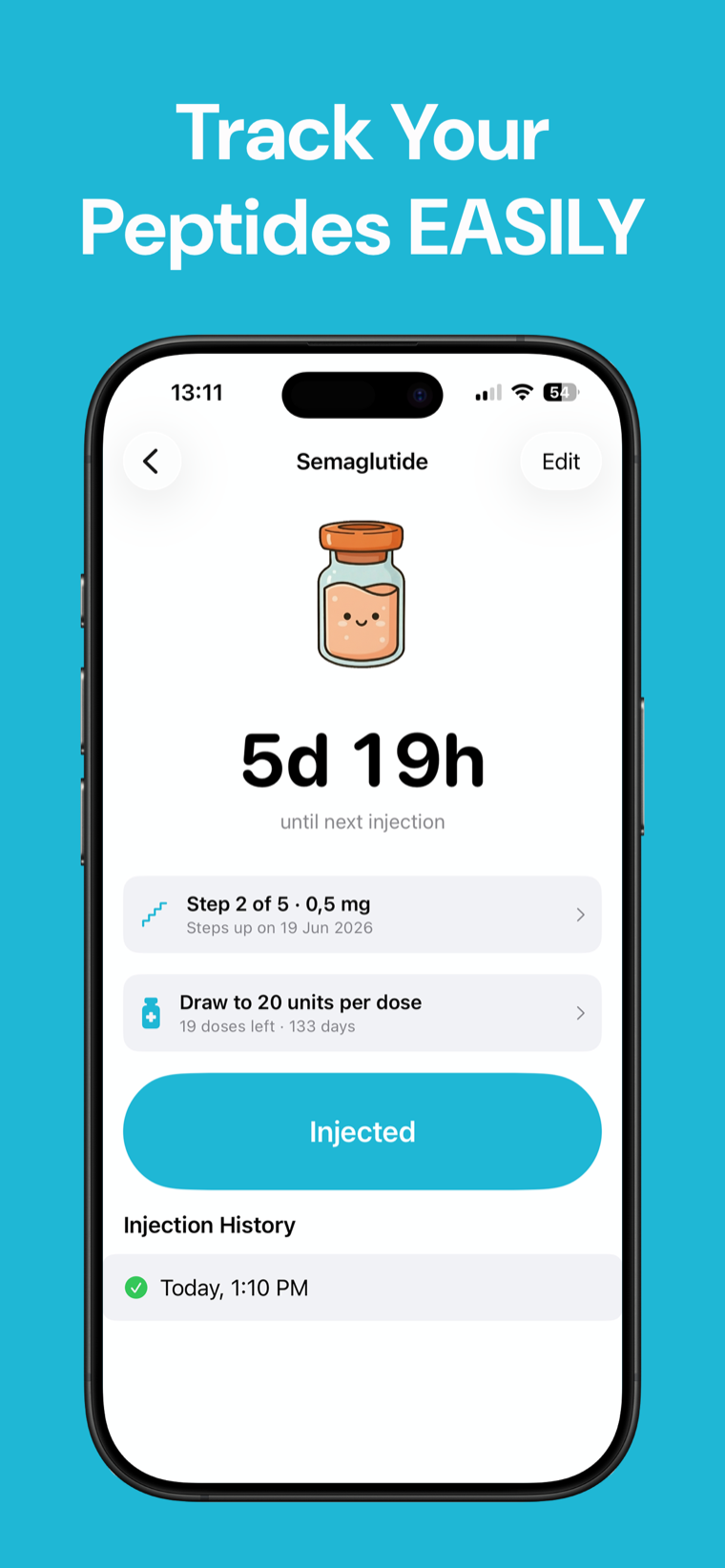
Track it in Peptide Tracker.
Keep peptide schedules, reminders and injection history private on your device.

How the mcg to mL calculator works
An mcg to ml calculator needs a concentration because mcg alone can never be converted to mL. Enter the concentration and the dose you supply; the calculator converts both to the same mass unit before dividing dose by concentration.
The result is the volume to draw in mL. It also shows the equivalent U-100 syringe units, where 100 units equal 1 mL, plus the dose expressed in both mcg and mg.
This tool does not suggest a dose. You supply both the concentration and desired dose from your prescription or preparation instructions.
volume (mL) = dose ÷ concentration 1 mg = 1000 mcg. 1 mL = 100 U-100 units = 1 cc. Confirm your syringe is U-100 before using the units result.
mcg to mL calculator FAQ
Can mcg be converted to mL without concentration?
No. A concentration is a ratio, so mcg alone cannot be converted to mL. You need the mass per milliliter, such as mcg/mL or mg/mL.
How do I use this mcg to mL calculator?
Enter the concentration and unit, the desired dose and unit, and the syringe size in mL. The result gives the volume in mL and its equivalent U-100 units.
How many U-100 units are in 1 mL?
There are 100 units in 1 mL on a U-100 syringe. The syringe must be marked U-100 for that units result to apply.
What is the difference between mcg and mg?
One mg equals 1000 mcg. The calculator displays the entered dose in both units after conversion.
Does this calculator recommend a dose?
No. It only calculates volume from the concentration and dose you enter. Use the dose supplied by your prescriber or dispensing pharmacy.